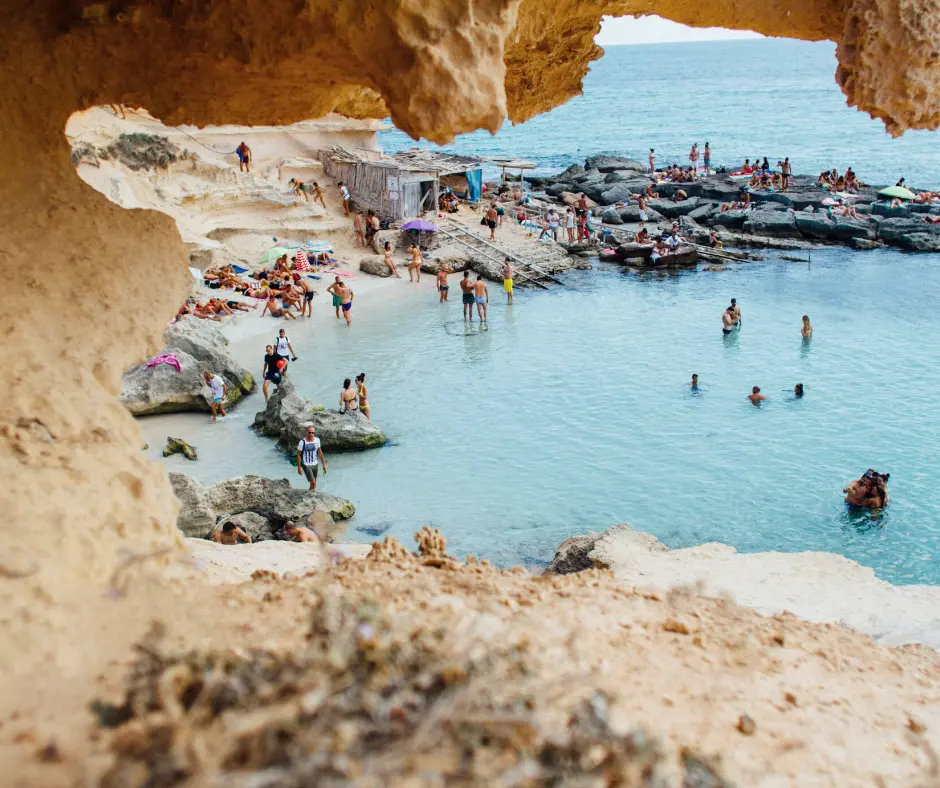


Looking for the Bali digital nomad visa? Here is the first thing to know: there is no visa called that. What people mean is Indonesia's E33G Remote Worker Visa, a national permit valid everywhere in the country, Bali included. It launched in 2024, it is the real legal route for living in Bali while working online, and it is genuinely good for the people it fits.
It is also surrounded by more confusion and more sales spin than almost any visa in Asia, because nearly every page ranking for it is run by an agency that makes money filing your application. This guide is not. So it will tell you the three things those pages tend to skip: the income bar is high ($60,000 a year), you can become an Indonesian tax resident from day one, and for most nomads the humble 60-day visit visa is actually the more useful option.
Here is the honest 2026 picture: what the E33G is, who it genuinely suits, how to apply, and what to do instead if it does not fit.
🌱 Health insurance for Bali and Indonesia
Good to know: valid health insurance is a required document for the E33G, and it is a practical necessity in Bali long before any visa. Island healthcare is limited, serious cases are often flown to Singapore or back home, and the standard advice from long-term residents is simple: do not rely on the local public system.
How to choose your health insurance?
Choose Genki Native if you have no access to a national health care system in your home country. It is comprehensive cover built for people whose base has moved, which is what a one-year KITAS means in practice.
Choose Genki Traveler if you have access to a national health care system elsewhere, or already hold other comprehensive cover, and confirm it meets the visa's requirement for the full stay.
🇮🇩 What is the Bali (Indonesia) digital nomad visa?
The official name is a mouthful: the E33G, or Visa Rumah Kedua Pekerja Jarak Jauh, which translates as the Second Home Remote Worker Visa. Most people just call it the Indonesia Remote Worker Visa or, loosely, the Bali digital nomad visa.
It is a limited-stay visa tied to a KITAS (a temporary stay permit), for foreigners who work remotely for a company based outside Indonesia. In plain terms:
- It gives you one year in Indonesia, renewable.
- It is multiple-entry, so you can come and go.
- It allows family (spouse and children on dependent permits).
- It is valid across all of Indonesia, not just Bali, despite how it is marketed.
It exists because Indonesia, and Bali especially, already had a huge population of remote workers living on tourist visas in a legal grey zone. The E33G is the government's move to bring them onshore, and it has come alongside a real crackdown on people working on tourist stamps (more on that below).
🛂 Do you even need it? The honest answer
This is the section the agency sites bury, because the honest answer costs them a client.
For a lot of nomads, the E33G is not the right visa, and the 60-day visit visa (B211A / C1) is the more useful route. Here is the split:
- The E33G suits you if you are a salaried employee of a foreign company, you earn $60,000 a year or more, and you want to base yourself in Bali for a year or two with the paperwork sorted.
- The visit visa suits you better if you earn under $60,000, you are a freelancer with messy or variable income, or you want to try Bali for a few months before committing. The single-entry visit visa gives 60 days and can be extended to around 180 days in-country, which covers most stays without the income test, the tax exposure, or the agency fees.
Realistically, the E33G's $60,000 income bar excludes a large share of working nomads, which is exactly why the "what to do instead" answer matters as much as the visa itself. Do not let an agent talk you onto the E33G if the visit visa does what you need.
⭐️ Key benefits of the E33G
🔄 Multiple entry, so you can leave and return freely
👨👩👧 Family included: spouse and children on dependent permits
🏝️ Valid nationwide: Bali, the Gilis, Lombok, Jakarta, anywhere
🛡️ Legal certainty amid a real crackdown on tourist-visa working (deportations and social-media monitoring are happening)
📌 At a glance: E33G visa facts
| Official name | E33G, Visa Rumah Kedua Pekerja Jarak Jauh (Remote Worker Visa) |
| Who it is for | Foreigners employed by a company registered outside Indonesia |
| Income requirement | At least $60,000/year (about $5,000/month) from foreign sources |
| Savings requirement | A bank balance of about $2,000 over the last 3 months |
| Duration | 1 year, renewable |
| Entries | Multiple |
| Family | Spouse and children on dependent permits |
| Valid in | All of Indonesia (Bali included) |
| Processing | Roughly 7 to 14 working days |
| Enter within | 90 days of the visa being issued |
| Passport validity | At least 18 months (for a KITAS) |
| Tax | Can be tax resident from day one as a KITAS holder (see below) |
| Freelancers | Officially unsettled; employees fit far more cleanly |
👩🏽💻 Who can apply?
The E33G is built for one profile in particular, and fits others awkwardly:
- Fits cleanly: salaried employees of a company registered outside Indonesia, earning $60,000+, paid from abroad.
- Fits awkwardly: freelancers and contractors. Several agencies will file for you, but freelance eligibility is genuinely unsettled, and immigration treats the employee case as the norm. If you are freelance, get a licensed agent to confirm your specific case before paying anyone.
- Does not fit: anyone earning under $60,000, anyone with Indonesian income, and anyone who wants to work for Indonesian clients or companies (that is the E23 Work KITAS, employer-sponsored) or run an Indonesian business (that is the investor route on a PT PMA).
You will need an employment contract with the foreign company, proof of its incorporation, bank statements showing the income and the $2,000 balance, health insurance, a passport valid 18+ months, a photo and a CV.
💶 The income requirement, and the catch
The headline is simple: at least $60,000 a year, roughly $5,000 a month, from foreign sources, proved with three to twelve months of bank statements or payslips. Plus a bank balance of about $2,000 held over the previous three months. Indonesian income does not count.
Two honest points the marketing pages skip:
It is a high bar. $60,000 is well above what Spain (~€2,760/month), Portugal (~€3,680) or Croatia ask, and above what a large share of nomads in Bali actually earn. If you are not there, the E33G is not your route, and that is fine, the visit visa is (see the alternatives section).
The government reviews the figure, so confirm the current number before applying rather than trusting any page, including this one.
✏️ Step-by-step application process
Before you apply: preparation checklist
- Passport valid at least 18 months, with blank pages.
- Employment contract with a company registered outside Indonesia.
- Certificate of incorporation of that company.
- Bank statements proving $60,000+ annual income and a $2,000+ balance over 3 months.
- Health insurance valid for the stay.
- Passport photo and CV.
- Proof of accommodation and a travel itinerary (commonly requested).
Detailed application walkthrough
- Confirm you actually want the E33G, not the visit visa, and that your income clears $60,000. Do this before anything else.
- Apply online through Indonesia's official immigration platform (evisa.imigrasi.go.id), or through a licensed agent. There is no consulate-appointment step like Europe's visas.
- Submit documents and pay. Processing is quick by regional standards, about 7 to 14 working days.
- Enter Indonesia within 90 days of issue, or the visa lapses.
- Complete biometrics on arrival, at which point the one-year e-KITAS is issued. Family permits run alongside.
- Renew before expiry if you are staying on.
Common mistakes and honest warnings
- Being talked onto the E33G when the visit visa fits better. Agents earn more on the KITAS. If you are under $60,000 or short-term, push back.
- Bali is agent-scam ground zero. More visa-agent fraud happens around Bali than almost anywhere in the nomad world. Use a licensed, established agent, verify their track record, and never hand over your passport and a large fee to someone you found in a Facebook comment.
- Taking any Indonesian work. Even one local client, even paid in dollars, breaks the permit. A freelance designer on an E33G who accepts a job from a Bali hotel is working illegally.
- Ignoring the tax question. See below, it is the catch that surprises people most.
- Letting it lapse or overstaying. Indonesia is actively enforcing, with deportations and entry bans.
⏳ How long does it take?
Fast, by international standards: roughly 7 to 14 working days once your documents are in. There is no lengthy consulate wait like Europe's nomad visas. The main timing rule to remember is the other direction: once issued, you must enter Indonesia within 90 days or the visa expires unused.
💴 E33G cost breakdown
- Government visa fee: in the region of a few hundred dollars for the one-year KITAS.
- Agent fees: most people use one, and this is where the real cost and the real variation sits, from a few hundred to well over a thousand dollars. Shop around, and be wary of both the cheapest and the pushiest.
- Health insurance: for the full stay.
- Renewal: further fees each year.
The fees are not the barrier here. The $60,000 income requirement is.
📚 Tax implications: the catch most guides skip
Read this before you apply, because it is the single most misunderstood thing about the E33G.
You can become an Indonesian tax resident from day one. Indonesia taxes residents on worldwide income, and you become a tax resident in either of two ways: by spending more than 183 days in the country over twelve months, or by being present with the intent to reside, which holding a KITAS, including the E33G, is taken to demonstrate, regardless of how many days you actually stay.
That second route is the surprise. On a tourist visa, the 183-day rule protects a short stayer. On an E33G KITAS, immigration's position is that you have shown intent to reside, so tax residency can attach much sooner. Indonesian resident income tax is progressive up to 35%.
The "four-year tax exemption" you may have read about (a break on foreign income for new residents) exists on paper but, per specialists, is applied unevenly and has been challenged in court. Do not build your finances around "foreign income is tax-free in Indonesia."
🏦 Banking and financial logistics
- A local bank account becomes possible with a KITAS and is useful for rent and daily life, though many nomads run on Wise and Revolut for foreign income.
- Bali runs on cash and QRIS (Indonesia's QR payment system); cards work in mid-range and up, but the warungs and small shops are cash.
- Long-term villa rentals are informal and often priced in USD, and scams around them are common, so have someone local check any contract before you pay.
🏡 Living in Bali as a digital nomad
Bali is the reason most people are reading this, and it remains one of the world's great nomad bases: Canggu and Pererenan for the beach-and-scene crowd, Ubud for wellness and jungle, Uluwatu for surf and clifftops. For the full breakdown of where to live, what it costs, the coworking spaces and the community, see our Bali for nomads guide.
One visa-relevant point: the E33G is valid across all of Indonesia, so it is not a "Bali visa" at all. It works just as well for Lombok, the Gilis, Jakarta, or a year spent island-hopping.
 Sarah Kuhlemann
🏥 Healthcare
Bali's private clinics (BIMC, Siloam) handle routine care well, but serious cases are typically evacuated to Singapore or home, and the public system is not something to rely on. Insurance that includes medical evacuation is close to essential, and it is a visa requirement anyway. Genki Native suits a long Indonesian base; Genki Traveler covers shorter stays. Emergency number: 112.
🌏 Indonesia vs. other Asian nomad visas
| Country | Income requirement | Duration | Tax note |
|---|---|---|---|
| Indonesia (E33G) | ~$60,000/year (~$5,000/mo) | 1 year, renewable | Tax resident from day one on a KITAS |
| Thailand (DTV) | ~฿500,000 savings (~$14k) | 5 years, 180 days/entry | Resident after 180 days/year |
| Malaysia (DE Rantau) | ~$24,000/year | 3–12 months, renewable | Territorial-leaning |
| Japan | ~¥10M/year (~$68k) | 6 months, non-renewable | Non-resident, foreign income untaxed |
Indonesia's E33G has one of the higher income bars in Asia and, unusually, a tax-residency trigger that can attach from day one. Thailand's DTV and Malaysia's DE Rantau are far more accessible on income for the typical nomad, which is worth knowing before you commit to Bali specifically over the region.
Sarah Kuhlemann Sarah Kuhlemann
🔁 What to do instead if the E33G does not fit
Because the income bar excludes so many, here are the real alternatives:
- The 60-day visit visa (B211A / C1): single entry, 60 days, extendable in-country to around 180 days. No income test, far cheaper, and the route most short-and-mid-term nomads actually use. The catch: it is technically for tourism, and Indonesia has tightened enforcement on working, so it sits in a grey zone the E33G removes.
- The Second Home Visa: a 5-to-10-year option, but it requires parking roughly $130,000 (IDR 2 billion) in an Indonesian state bank, so it is for the wealthy, not the average nomad.
- Look at the region: if the $60,000 bar is the problem, Thailand's DTV or Malaysia's DE Rantau give you Southeast Asia at a fraction of the income requirement.
❓ Frequently asked questions
Is there a Bali digital nomad visa?
Not by that name. The "Bali digital nomad visa" is Indonesia's E33G Remote Worker Visa, a one-year national KITAS valid across the whole country, Bali included. It needs $60,000 a year in foreign income.
How much do you need to earn for the E33G?
At least $60,000 a year (about $5,000 a month) from foreign sources, plus a bank balance of about $2,000 over three months. It is one of the higher income bars in Asia.
Do I have to pay tax in Indonesia on the E33G?
Possibly from day one. As a KITAS holder you can be treated as a tax resident regardless of the 183-day rule, because the permit is taken to show intent to reside. Indonesia taxes residents on worldwide income. Take specific advice before applying.
Can freelancers get the E33G?
It is unsettled. The visa is built for salaried employees of foreign companies. Some agents will file freelance cases, but eligibility is genuinely unclear, so confirm your situation with a licensed agent first.
What if I earn less than $60,000?
The E33G is not for you, and that is fine. Most nomads under that bar use the 60-day visit visa (extendable to ~180 days), or look at Thailand's DTV or Malaysia's DE Rantau, which have far lower income requirements.
Can I work for Balinese or Indonesian clients on it?
No. It is strictly for foreign-sourced income. Even a single Indonesian client, paid in any currency, breaks the permit. Local work needs a different visa.
Is it really valid outside Bali?
Yes. Despite the marketing, the E33G is a national visa, valid anywhere in Indonesia, from Lombok to Jakarta.
🚀 Resources and tools
- Official application: Indonesia's immigration e-visa portal, evisa.imigrasi.go.id.
- The income figure and rules: the Directorate General of Immigration, which reviews the threshold periodically, so verify before filing.
- Bali in depth: our Bali for nomads guide for where to live, costs, coworking and community.
- The alternatives: our Asia coworking and regional guides for weighing Bali against Thailand and Malaysia.
🎯 Conclusion
The Bali digital nomad visa is really Indonesia's E33G, and for a well-paid remote employee who wants a legal year in Bali, it is a genuinely good option: one year, family included, valid nationwide, and processed fast.
But be honest with yourself about the three things the agency sites won't stress. The income bar is high at $60,000. The tax exposure is real and can start from day one. And if you earn less or freelance, the humble 60-day visit visa is very likely the smarter route, no income test, a fraction of the cost, and enough for most stays. Get the visa that fits your situation, not the one an agent earns the most on, and Bali will look after the rest.
Sarah Kuhlemann Sarah Kuhlemann
 Sarah Kuhlemann
 Sarah Kuhlemann
 Sarah Kuhlemann