

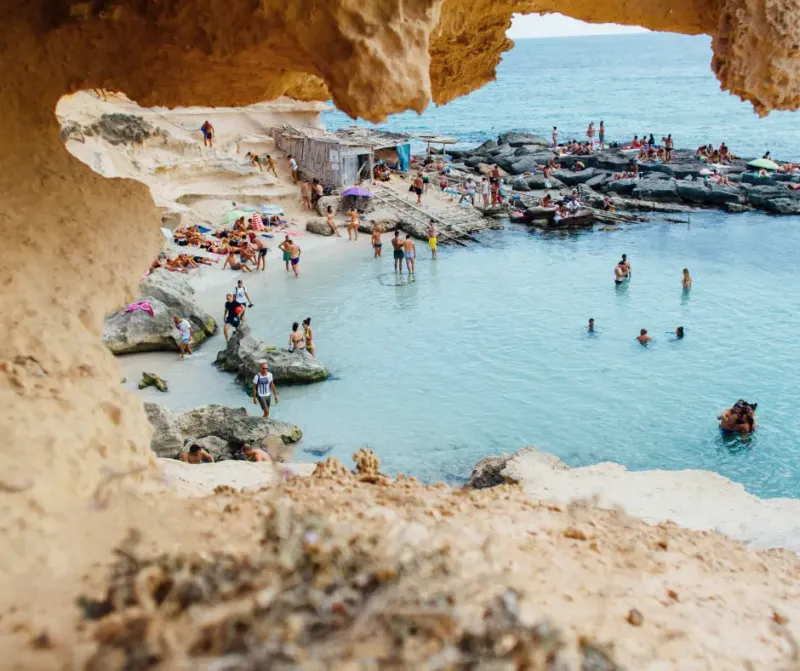
Spain's digital nomad visa has been running since January 2023, and it has quietly become one of the strongest remote work routes in Europe.
Three years of residency from a single application. A flat 24% tax rate on income up to €600,000. Family included. Decisions in about twenty working days. A path to permanent residency after five years. And an income bar lower than Portugal's, in a country with better weather, cheaper cities and the most established nomad communities on the continent.
This guide covers what you need, what it costs, how the tax regime works, and how to apply.
🌱 International health insurance for Spain
Good to know: Spain's insurance requirement is stricter than most nomad visas, so it is worth sorting early. Your policy must have no co-payments and no waiting periods, cover the full length of your stay, match the coverage of Spain's public health system, include repatriation, and come from a provider authorized to operate in Spain.
How to choose your health insurance?
Choose Genki Native if you have no access to a national health care system in your home country. It is comprehensive cover built for people whose base has moved, which is what a three-year residence permit means in practice.
Choose Genki Traveler if you have access to a national health care system elsewhere, or already hold other comprehensive cover.
🇪🇸 What is the Spain digital nomad visa?
Formerly the autorización de residencia para teletrabajadores de carácter internacional, it was created by Ley 28/2022, the Startup Law, and sits within Ley 14/2013. It is for non-EU nationals working remotely for employers or clients based outside Spain.
It comes in two forms, and choosing the right one matters:
| Route | Where you apply | What you get |
|---|---|---|
| Visa | Spanish consulate in your country of residence | 1 year, then convert to the residence permit from inside Spain |
| Residence permit | UGE-CE, from inside Spain | 3 years directly, renewable |
The three-year permit is the better instrument. It is also handled by a single specialist unit, the Unidad de Grandes Empresas y Colectivos Estratégicos, rather than by individual consulates, which makes requirements and timelines more consistent.
To use it you must already be legally in Spain in a qualifying situation. As of 2026 the UGE does not allow a switch into digital nomad residency from a tourist entry, a Non-Lucrative Visa, or another non-work permit. If you are on an NLV and want to move across, you apply at a consulate abroad and re-enter on the new visa.
🛂 Do you need the visa?
If you hold an EU or EEA passport, no. You have freedom of movement and simply register locally.
For everyone else, Spain is in Schengen, so visa-free nationalities get 90 days in any 180-day window. That covers a season. It does not cover a base, and since the EU's Entry/Exit System began logging entries and exits biometrically, overstays are flagged automatically.
The nomad visa gives you explicit permission to work remotely, three years of residency, access to the Beckham Law tax regime, and a route to permanent status. If Spain is the plan rather than a stop, it is the right instrument.
⭐️ Key benefits
💶 Beckham Law: a flat 24% rate on income up to €600,000, against a progressive scale reaching 47%
🇪🇺 Schengen travel across 29 countries
👨👩👧 Family included: spouse and dependants apply alongside you
⚡ Fast decisions: the UGE typically resolves in around 20 working days
🛣️ Long-term residency after five years, citizenship after ten
📌 At a glance: visa facts
| Legal basis | Ley 28/2022 (Startup Law), within Ley 14/2013, Art. 74 bis |
| Income requirement 2026 | €2,849/month, or €34,188/year |
| How it is calculated | 200% of the annual SMI (€1,221 × 14 payments = €17,094) |
| First dependent | +75% of SMI, about €1,068/month |
| Each further dependent | +25% of SMI, about €356/month |
| Spanish client cap | No more than 20% of income from Spanish sources |
| Duration | 1 year (consulate) or 3 years (UGE), renewable to 5 |
| Fee | Around €100, plus consular or service charges |
| Processing | Roughly 20 working days at the UGE |
| Health insurance | Mandatory, no co-pays, no waiting periods, Spain-authorised insurer |
| Tax | Beckham Law available: flat 24% up to €600,000 |
| Leads to residence? | Yes, long-term residency after 5 years |
👩🏽💻 Who can apply?
Two profiles qualify:
- Employees working remotely for a company registered outside Spain
- Freelancers invoicing clients outside Spain
You will also need:
- Income at or above the threshold, documented over the preceding months
- A working relationship at least three months old, with a company that has been operating for at least a year
- Professional qualifications: a relevant degree, or at least three years of relevant experience
- A clean criminal record from every country you have lived in over the past five years, apostilled and sworn-translated
- Private health insurance meeting the conditions above
- No more than 20% of income from Spanish clients, if you are a freelancer
That last one is a firm line rather than a guideline. Exceeding it means refusal.
💶 How much income do you need?
The threshold is 200% of Spain's minimum wage, the Salario Mínimo Interprofesional, which means it is recalculated every year.
Royal Decree 126/2026 set the 2026 SMI at €1,221 a month, paid in 14 installments, giving an annual figure of €17,094.
200% of that is €34,188 a year, which is €2,849 a month.
The 14-payment structure is the part worth understanding. Spanish salaries include two extra statutory payments, in summer and at Christmas, so the annual wage is fourteen times the monthly figure rather than twelve. Spread evenly across the year, the SMI works out at €1,424.50 a month, and the requirement is twice that. Budget for €2,849.
With family:
| Main applicant | €2,849/month (€34,188/year) |
| First dependent | +€1,068/month (€12,820/year) |
| Each additional dependent | +€356/month (€4,273/year) |
A couple with one child needs roughly €4,273 a month in documented income.
Because the figure is tied to the minimum wage, it moves whenever the SMI is revised, usually by royal decree in January or February. Check the current number before you file.
✏️ How to apply
What to prepare
- Passport, valid well beyond your intended stay
- Proof of income at the threshold: contracts, payslips, client agreements, invoices, bank statements
- Evidence of the remote relationship: employer authorization to work from Spain, or client contracts if freelance
- Proof the company has operated for at least a year, and that your relationship with it is at least three months old
- Professional qualification or evidence of three years' relevant experience
- Criminal record certificate from each country of residence over the past five years, apostilled and sworn-translated
- Private health insurance from a Spain-authorized insurer
- Social security coverage: a certificate of coverage from your home country under a bilateral agreement, or registration in Spain's self-employment system
The process
- Choose your route. Consulate abroad for the one-year visa, UGE from inside Spain for the three-year permit.
- Start the apostilles first. Legalization and sworn translation routinely take longer than the visa decision itself, so this is where the timeline is won or lost.
- Check your income clears the current threshold, including any dependants.
- File and pay, around €100 plus any consular or service charge.
- Wait for the decision. The UGE usually resolves in about 20 working days. Consulates vary, and busy posts such as London, Miami and Dubai have appointment waits of 8 to 12 weeks before you can even file.
- Collect your TIE, the foreigner identity card, and register locally once approved.
- Apply for the Beckham Law regime separately, and promptly. See below.
Worth knowing before you start
- Apostilles are the bottleneck. Begin with them.
- The 20% Spanish client cap applies to freelancers and is strictly enforced.
- Standard travel insurance usually will not qualify. Check for co-payments, waiting periods, and Spanish authorization.
- The Beckham Law has its own deadline, separate from the visa. Missing it is expensive.
- You cannot switch in from a tourist entry or NLV while inside Spain.
⏳ How long does it take?
The UGE typically resolves in around 20 working days, which is among the fastest nomad visa decisions in Europe.
The realistic timeline is dominated by preparation rather than processing. Budget two to three months from starting to landing, most of it spent on apostilles, sworn translations and consular appointments.
💶 What it costs
- Visa or permit fee: around €100
- Consular or service charges: vary by post
- Apostilles and sworn translations: typically €200 to €500, depending on how many countries you have lived in
- Health insurance: from around €80 a month for compliant cover
- TIE card: around €20
- Legal help: optional, typically €1,000 to €2,500. Many people file without it, though the Beckham Law application is where advice tends to pay for itself
📚 Tax: the Beckham Law
This is what makes Spain competitive despite the income bar.
Spanish tax residency normally means progressive rates rising to around 47%. But under Article 93 LIRPF, known as the Beckham Law, digital nomad visa holders who have not been Spanish tax residents in the previous five years can elect to be taxed as non-residents: a flat 24% on income up to €600,000, for the year of arrival plus five more.
Three things to know:
It is a separate application with its own deadline, generally within six months of registering with Spanish social security. Miss it and you are on the progressive scale.
It applies to Spanish-source employment income. How foreign income is treated under the regime depends on your circumstances and is more nuanced than most summaries suggest.
The 183-day rule still applies. Spend more than half the year in Spain and you are a tax resident, whichever regime you are on.
🏡 Living in Spain as a digital nomad
Budget roughly €1,600 to €2,400 a month in Madrid or Barcelona, €1,300 to €1,900 in Valencia or Seville, and less in the smaller Andalusian cities.
| City | Best for | Cost | Community |
|---|---|---|---|
| Barcelona | Scale, beach and city together, the biggest scene | High | Very strong |
| Madrid | Business, flights, year-round energy | High | Strong |
| Valencia | The value pick: beach, walkable, growing fast | Medium | Strong |
| Málaga | Winter sun and a fast-growing tech hub | Medium | Growing |
| Seville | Culture and lower costs, if you can take the heat | Low-medium | Small |
| Las Palmas | Year-round spring and a deliberate remote-work economy | Medium | Strong |
Valencia and Las Palmas de Gran Canaria are the two that come up most often from people who have tried several.
Fibre is near-universal and among the cheapest in Europe, coworking is well established in every city above, and the Canary Islands have built infrastructure specifically for remote workers.
[Spain for nomads → link to the country guide]
🏥 Healthcare
Spain's public health system is among the best in Europe, and once you hold residency and contribute to social security, you can access it. Private care is also good and inexpensive by northern European standards.
Before that point, and as a condition of the visa itself, you need compliant private cover. See the section at the top of this guide.
Emergency number: 112.
🌏 Spain vs. other European nomad visas
| Country | Income requirement | Duration | Tax position |
|---|---|---|---|
| Spain | €2,849/month | 3 years, renewable to 5 | Beckham Law: flat 24% |
| Portugal | €3,680/month | 2 years, then 3-year renewals | No advantage since NHR closed |
| Slovenia | About €3,360/month | 1 year, non-renewable | No specific regime |
Spain has the lowest income bar of the three, the longest initial permit, and the only meaningful tax regime. Portugal's overall runway is longer, but its tax advantage ended when NHR closed to new applicants at the end of 2024.
 Sarah Kuhlemann
🔁 What happens after the visa?
- Renewal: the three-year permit renews for a further two, giving five years in total
- Long-term residency after five years of legal residence
- Citizenship after ten years, or two years for nationals of Ibero-American countries, Andorra, the Philippines, Equatorial Guinea and Portugal, and for Sephardic Jews
- The Golden Visa closed in 2025, which makes the nomad visa the main remaining route for many people
❓ Frequently asked questions
How much income do you need for the Spain digital nomad visa in 2026?
€2,849 a month, or €34,188 a year. That is 200% of the annual minimum wage, which Royal Decree 126/2026 set at €1,221 a month across 14 payments.
Why is the figure not simply double the monthly minimum wage?
Because Spanish salaries include two extra statutory payments each year, so the annual wage is fourteen times the monthly figure. The requirement is calculated on the annual amount.
Can I apply from inside Spain on a tourist visa?
No. As of 2026 the UGE does not allow a switch into digital nomad residency from a tourist entry, a Non-Lucrative Visa, or another non-work permit. Apply at a consulate abroad instead.
How long does it take?
The UGE typically resolves in around 20 working days. Preparation takes considerably longer: budget two to three months overall, mostly for apostilles and translations.
What is the Beckham Law and do I qualify?
A tax regime allowing a flat 24% rate on income up to €600,000 for six years, open to people who have not been Spanish tax residents in the previous five. It is a separate application with a short deadline, so plan for it before you arrive.
Can I work for Spanish clients?
Freelancers can, but no more than 20% of income may come from Spanish sources.
Can my family come?
Yes. Add €1,068 a month for the first dependent and €356 for each additional one.
One year or three years?
A consulate abroad grants one year, then you convert. The UGE grants three years directly, but you must already be legally in Spain in a qualifying situation.
🚀 Resources and tools
- Legal basis: Ley 28/2022 (Startup Law) and Ley 14/2013, Art. 74 bis
- 2026 minimum wage: Real Decreto 126/2026, BOE
- Applications from inside Spain: Unidad de Grandes Empresas y Colectivos Estratégicos (UGE-CE)
- Applications from abroad: your nearest Spanish consulate
- Tax regime: Article 93 LIRPF, the Beckham Law
- Language: Duolingo, Italki
🎯 Conclusion
Spain is one of the best remote work bases in Europe, and its nomad visa is one of the better instruments on the continent: three years from a single application, fast decisions, family included, and a flat 24% tax rate that Portugal can no longer match.
Check that you clear €2,849 a month. Start your apostilles before anything else, because that is where the time goes. And speak to a Spanish tax adviser about the Beckham Law before you arrive rather than after, since the deadline is short and the saving is substantial.
Sarah Kuhlemann Sarah Kuhlemann
 Sarah Kuhlemann
 Neville Mehra
 Sarah Kuhlemann